Plan a Birding Trip Without Chasing a Checklist
- The short answer
- Decide what would make the outing worthwhile
- Choose a place from current information
- Match habitat and season to possibilities
- Plan for light without promising a busy hour
- Check weather twice and keep a fallback
- Audit the route for the people going
- Build one route, one fallback and one stop rule
- Pack for the route, not for an equipment parade
- Prepare identification without scripting the result
- Keep the outing safe for birds
- Run the day from the plan
- Review what worked
- Sources
The short answer
Plan a birding trip around a place and its conditions, not a promised species list. Check the land manager’s current access rules, opening hours, closures and route information; compare habitat and season with recent and historical observations; match distance, surface, slope and facilities to the group; and check weather and daylight. Choose one primary route, a shorter fallback and a clear turnaround time. Birds remain possibilities. A safe, workable outing is the result you can plan.
Decide what would make the outing worthwhile
“See as many birds as possible” sounds like a plan until the first closed gate, muddy path or quiet hour. Give the trip a purpose you can actually control:
- Spend time in one habitat and learn its common birds.
- Practise identifying birds by shape and behaviour.
- Listen from a stationary viewpoint.
- Compare two short routes at the same site.
- Introduce a new birder without rushing them.
- Photograph birds from a respectful distance.
A target species can guide the choice of habitat and season, but it is never an appointment. Historical reports show what other observers recorded, not what a bird is obliged to do on Saturday.
Set the outing’s length, pace and stopping point before choosing a long list of locations. One wetland edge with two good viewpoints can be a better first trip than five sites connected by hurried drives. Leave room to watch common birds properly; they are not the waiting room for something rarer.
Choose a place from current information
Start with the official page for the park, refuge, reserve or other managed land. Confirm:
- Opening and closing times for the exact date
- Seasonal closures or restricted areas
- Entry, parking or permit requirements
- Which roads, trails, hides or observation areas are open
- Rules for dogs, bicycles, photography and group size
- Visitor-centre and restroom availability
- Current alerts, construction, fire, flood or weather impacts
- A contact point for questions the page does not answer
Do not rely on an old trip report for access. A useful birding account can remain online long after a boardwalk closes or a gate schedule changes. The U.S. Fish and Wildlife Service’s Malheur National Wildlife Refuge page, for example, directs visitors to designated roads, trails and sites and tells them to follow current refuge rules and policies. The authority responsible for a place is the source for what is permitted there now.
Check whether the site still works when the most famous loop is unavailable. A roadside viewpoint, paved path, visitor-centre window or short out-and-back route can be the fallback rather than a consolation prize invented in the car park.
Match habitat and season to possibilities
Write down the site’s main habitats: open water, mudflat, reed bed, grassland, scrub, woodland edge, mature forest, rocky coast or another specific setting. Then consult current regional species accounts and observation tools for the date.
Cornell Lab’s guide to planning with eBird Hotspot Explorer explains that hotspot records can be viewed through bar charts, recent sightings and mapped locations. Use that information to build a short list of plausible groups and a few species worth reviewing in advance. A bar chart reflects submitted records; it does not guarantee presence, abundance, visibility or access.
Ask four questions about any hoped-for bird:
- Is the species normally present in this region at this time of year?
- Does the site contain the habitat it uses in that season?
- Is the relevant habitat visible from a legal, open route?
- Could weather, water level, tide, leaf cover or human activity change detectability?
If the answer to one is uncertain, keep the bird in the “possible” column. The trip still has a sound basis if the habitat and route suit a wider set of local birds.
Plan for light without promising a busy hour
Look up official sunrise and sunset times for the location and date, then compare them with site hours and the time needed to return. “Early” is not a useful instruction by itself: it changes with season, latitude and the site’s gate schedule.
Some birds are more detectable at particular times, but no clock creates a sighting. Plan around the group’s travel, visibility and safe return first. If the only schedule requires walking an unfamiliar trail in darkness, choose an open viewpoint, a later start or another date rather than treating a headlamp as permission to improvise.
Build a simple timetable:
- Arrival and parking buffer
- Primary observation window
- Rest or meal break
- Turnaround time for an out-and-back route
- Site closing time
- Daylight margin for the return
The turnaround time applies even when the birds become interesting. A late sighting does not extend an official closing time or make a dark return route safer.
Check weather twice and keep a fallback
Read the forecast while planning and again before departure. Use the relevant national or local weather authority, then read the land manager’s alerts. Conditions at an exposed shore, mountain overlook or wet boardwalk may differ from the nearest town.
Decide in advance what cancels or shortens the outing: severe-weather warnings, unsafe heat or cold, flooding, high wind, poor visibility, wildfire restrictions, inaccessible roads or another condition the group cannot manage safely. Follow official closures and emergency instructions.
Pair the primary route with a fallback that demands less distance or exposure. Good alternatives include a visitor-centre viewing area, sheltered hide, short paved loop, vehicle-accessible observation point or a later date. Do not shelter under isolated trees during lightning or cross flooded paths, moving water, ice, unstable banks or closed barriers.
Audit the route for the people going
“Accessible” is not enough detail. Birdability notes that access descriptions on venue websites can be incomplete and that a place workable for one person may not work for another. Its access considerations recommend checking concrete route features so visitors can decide for themselves.
For each route, confirm:
- Total distance and whether it is a loop or out-and-back
- Surface material and current condition
- Running slope and cross slope where available
- Steps, gates, narrow points, roots, ruts, sand or mud
- Benches, rest points and spacing between them
- Accessible parking, drop-off and public-transport options
- Restrooms and their opening status
- Shade, shelter and indoor alternatives
- Noise, crowds and opportunities for a quiet break
- Whether a wheelchair, scooter, cane, walker or other device can use the full planned route
Ask participants what information they need instead of deciding for them. A birder may prefer a shorter path, a seated viewpoint, birding by ear, frequent breaks or a stationary “big sit.” Make those first-class versions of the outing, not exceptions announced at the trailhead.
If the official page lacks detail, contact staff. Ask specific questions about surface, slope, distance, gates, benches and recent obstructions. Keep the fallback within the same access requirements; a steep emergency shortcut is not a fallback for a level route.
Build one route, one fallback and one stop rule
Mark the parking or transit point, primary path, observation stops, restrooms, staffed facilities and turnaround point on a map. Download or print what you need before leaving; reception can be unreliable.
The route should have a closed endpoint: return to the trailhead by the set time, complete one loop, or stop after the final named viewpoint. The fallback should be equally explicit. “We will see how far we get” transfers route planning to the moment when people are tired or distracted.
Set a stop rule for weather, injury, route closure, failing light, equipment failure or any participant who cannot continue comfortably. Turn back or use the fallback without a vote that pressures someone to justify their needs.
The National Park Service’s Ten Essentials guidance advises telling someone where you are going and when to expect you back. Share the site, route, vehicle or transport plan and return time with a person who is not on the outing. For remote or longer routes, follow the land manager’s specific trip-planning and emergency guidance.
Pack for the route, not for an equipment parade
Bring what the location, weather and duration require. A basic day-out list may include:
- Water and food appropriate to the outing
- Weather protection and suitable footwear
- Site map and a backup navigation method
- Charged phone and any location-specific emergency information
- Personal medication and mobility or sensory aids
- Small first-aid kit
- Binoculars if useful
- Notebook and pencil or a charged recording device
- Field guide or downloaded identification references
The NPS groups its Ten Essentials around navigation, sun protection, insulation, illumination, first aid, fire, repair tools, food, hydration and emergency shelter. Not every short urban outing needs the same load as a remote trail. Use the official guidance for the setting and the needs of the people attending.
If you are choosing optics, our guide to binoculars for bird watching explains practical fit and viewing criteria. A comfortable pair used steadily is more useful than heavier equipment that stays in the bag.
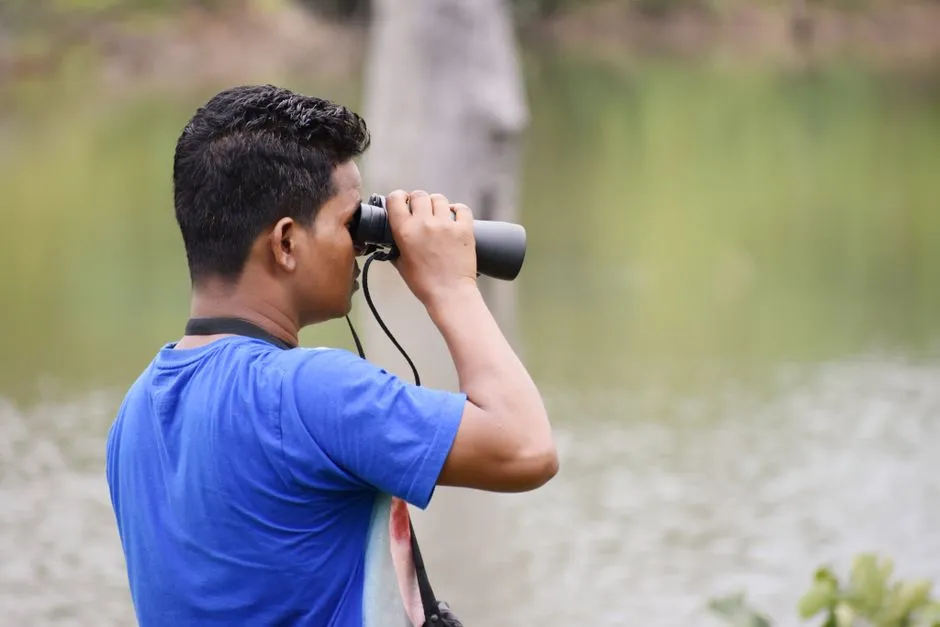
Secure loose straps before walking, never look through binoculars while moving, and stop in a stable position before raising optics. Keep equipment clear of roadways, platform edges and other visitors’ routes.
Prepare identification without scripting the result
Review a manageable set of common birds and likely look-alikes before leaving. Save or print the features that distinguish them: size, shape, bill, overall pattern, behaviour, habitat and voice. Our guide to identifying birds gives a reusable observation sequence.
Make a note template with date, location, habitat, weather, approximate number, behaviour and confidence. A record can remain “sparrow species” or “probable flycatcher.” The goal is to preserve what was observed, not to make every line in the notebook reach species level.
Download reference material for offline use if the provider allows it. Test any app, camera or audio recorder at home, with volume muted. In the field, listen to reference calls through headphones away from birds; do not broadcast recordings to provoke a response.
Keep the outing safe for birds
Follow posted routes, closures and minimum distances. Do not chase, flush, bait, touch or crowd birds. Stay away from nests and nesting colonies, and do not move vegetation for a view. The U.S. Fish and Wildlife Service’s birding ethics guidance calls for observing without significant disturbance, avoiding repeated flushing, keeping appropriate distance from nests and staying on established routes where possible.
If a bird changes behaviour because of your approach, back away. Do not use playback to draw it closer. Keep group voices and movements controlled, allow other visitors to pass, and leave habitat as found.
Report a sensitive or rare bird only through channels whose location-sharing rules protect it. Follow the land manager’s instructions rather than posting a precise nest or roost location automatically.
Run the day from the plan
At arrival, check the gate, noticeboard and official alerts again. Conditions can change after the last website visit. Confirm the route, fallback, turnaround time and meeting point with everyone.
Move at the agreed pace and stop where the group can stand or sit without blocking a trail. Keep a count of participants. Check the weather and time at planned breaks rather than waiting for conditions to force the decision.
When the hoped-for species does not appear, stay with the habitat plan. Watch feeding behaviour, compare common species, practise listening or sketch one bird’s shape. Do not extend the route, enter a closed area or pressure a bird because a checklist still has an empty box.
At the endpoint, account for everyone and leave by the planned route. Tell the outside contact that the group is back.
Review what worked
After the trip, keep the notes that will improve the next one: actual route duration, surface condition, useful viewpoints, rest facilities, access barriers, weather effects and any discrepancy in official information. Send access updates to the land manager or an appropriate mapping project when useful.
Separate observations from expectations. Record birds actually seen or heard with honest confidence; keep hoped-for species out of the completed list. An outing with no headline rarity can still produce a better route, stronger identification notes and a reliable fallback. Those are repeatable results. A bird sighting never was.
Sources
- Cornell Lab of Ornithology: How to Plan a Birding Day Trip With eBird Hotspots
- Birdability: Access Considerations for Birding Locations
- U.S. National Park Service: Ten Essentials
- National Audubon Society: Guide to Ethical Bird Photography and Videography
- U.S. Fish and Wildlife Service: Birding Ethics
- U.S. Fish and Wildlife Service: Malheur National Wildlife Refuge Auto Tour